# プラグインの自動公開

### 背景

プラグイン貢献者が**他のユーザーにすでに使用されているDifyプラグイン**を更新する必要がある場合、そのプロセスは非常に煩雑です：貢献者はまずプラグインのソースコードを修正してバージョン番号を更新し、変更をプラグインソースリポジトリにプッシュし、フォークしたdify-pluginリポジトリに新しいブランチを作成する必要があります。その後、プラグインを手動でパッケージ化し、パッケージファイルをアップロードし、元のdify-pluginリポジトリにマージするためのPRを作成する必要があります。このプロセスはプラグインコードが変更されるたびに繰り返す必要があり、時間がかかり非効率的です。

このワークフローを簡素化するために、**Plugin Auto-PR**と呼ばれるGitHub Actionsベースの自動化ワークフローを構築しました。このツールを使用すると、プラグイン貢献者はプラグインのパッケージ化、ブランチのプッシュ、PRの作成を一度の操作で完了できます。

### 概念紹介

#### GitHub Actions

GitHub Actionsは、GitHubが提供する組み込みのCI/CDサービスで、様々なビルド、テスト、デプロイタスクを自動化します。

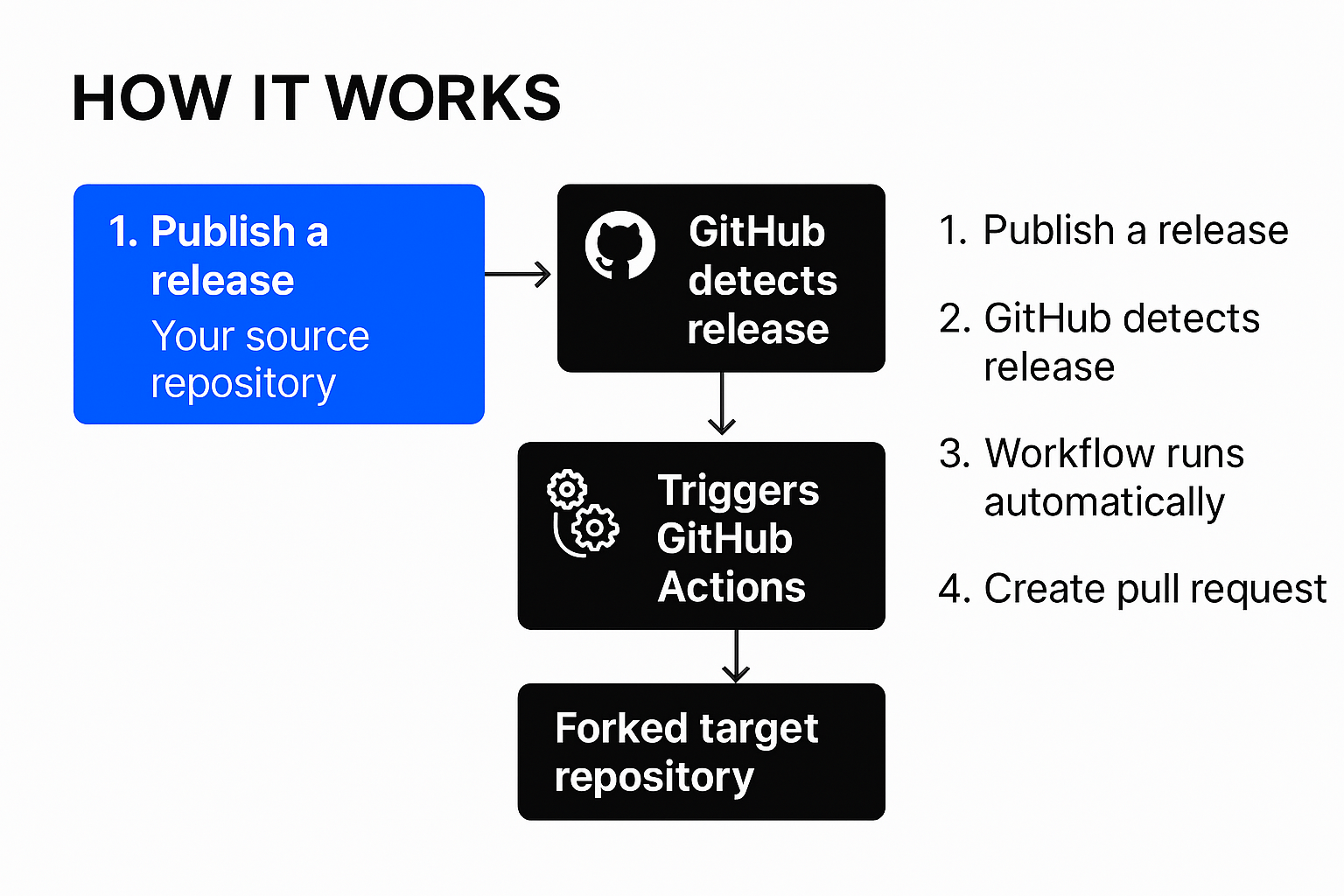
**動作原理**：トリガー条件（コードのプッシュなど）が満たされると、GitHubは自動的に仮想マシンを割り当ててワークフローを実行します。すべての操作はGitHubクラウドで完了します。
![ワークフロー](https://assets-docs.dify.ai/2025/04/60534de8e220f860947b32a8329a8349.png)

**無料枠の制限**：

* 公開リポジトリ：無制限
* プライベートリポジトリ：月2000分

#### Plugin Auto-PR

**動作原理**：

1. プラグインソースリポジトリのmainブランチにコードをプッシュすると、ワークフローがトリガーされます
2. ワークフローは`manifest.yaml`ファイルからプラグイン情報を読み取ります
3. プラグインを自動的に`.difypkg`ファイルとしてパッケージ化します
4. パッケージファイルをフォークした`dify-plugins`リポジトリにプッシュします
5. 新しいブランチを作成して変更をコミットします
6. 上流リポジトリへのマージを自動的にPRで要求します

### 環境準備

#### リポジトリ要件

* すでに独自のプラグインソースコードリポジトリがある（例：`your-name/plugin-source`）
* すでに独自のフォークしたプラグインリポジトリがある（例：`your-name/dify-plugins`）

```
dify-plugins/
└── your-author-name
    └── plugin-name
```

#### 権限要件

このワークフローが正常に機能するには、適切な権限が必要です：

* 十分な権限を持つGitHub Personal Access Token（PAT）を作成する必要があります
* そのPATはフォークしたリポジトリにコードをプッシュする権限が必要です
* そのPATは上流リポジトリにPRを作成する権限が必要です

### パラメータと設定の詳細

#### 必須パラメータ

プラグイン自動公開ワークフローでは、以下の重要な要素を正しく設定する必要があります：

**manifest.yamlファイル**：これは自動化プロセス全体の中核となる設定ソースです。以下のフィールドが正しいことを確認する必要があります：

* `name`：プラグイン名（パッケージ名とブランチ名の生成に使用）
* `version`：バージョン番号（更新のたびに増分する必要あり）
* `author`：GitHubユーザー名（ターゲットリポジトリパスの決定に使用）

**PLUGIN\_ACTION Secret**：プラグインソースリポジトリにこのシークレットを正しく設定する必要があります。

* 値の要件：十分な権限を持つPersonal Access Token（PAT）である必要があります
* 権限要件：フォークしたリポジトリにブランチをプッシュし、上流リポジトリにPRを作成する能力

#### 自動生成されるパラメータ

ワークフローは**以下を自動的に処理**し、手動介入は不要です：

* GitHubユーザー名：`manifest.yaml`の`author`フィールドから読み取り
* 作者フォルダ名：`author`フィールドと一致
* プラグイン名：`manifest.yaml`の`name`フィールドから読み取り
* ブランチ名：`bump-{plugin-name}-plugin-{version}`
* パッケージファイル名：`{plugin-name}-{version}.difypkg`
* PRのタイトルと内容：プラグイン名とバージョンに基づいて自動生成

### インストールと設定手順

{% stepper %}
{% step %}
**リポジトリの準備**

公式の`dify-plugins`リポジトリをフォークし、独自のプラグインソースリポジトリがあることを確認します。
{% endstep %}

{% step %}
**シークレットの設定**

プラグインソースリポジトリに移動し、**Settings > Secrets and variables > Actions > New repository secret**をクリックして、GitHubシークレットを作成します：

* 名前：`PLUGIN_ACTION`
* 値：ターゲットリポジトリ（`your-name/dify-plugins`）への書き込み権限を持つGitHub Personal Access Token（PAT）

![シークレットの作成](https://assets-docs.dify.ai/2025/04/8abd72b677dd24752910c304c76f1c26.png)
{% endstep %}

{% step %}
**ワークフローファイルの作成**

リポジトリに`.github/workflows/`ディレクトリを作成し、このディレクトリに`plugin-publish.yml`という名前のファイルを作成し、以下の内容をファイルにコピーします：

```yaml
# .github/workflows/auto-pr.yml
name: Auto Create PR on Main Push

on:
  push:
    branches: [ main ]  # Trigger on push to main

jobs:
  create_pr: # Renamed job for clarity
    runs-on: ubuntu-latest
    steps:
      - name: Checkout code
        uses: actions/checkout@v3

      - name: Print working directory # Kept for debugging
        run: |
          pwd
          ls -la

      - name: Download CLI tool
        run: |
          # Create bin directory in runner temp
          mkdir -p $RUNNER_TEMP/bin
          cd $RUNNER_TEMP/bin

          # Download CLI tool
          wget https://github.com/langgenius/dify-plugin-daemon/releases/download/0.0.6/dify-plugin-linux-amd64
          chmod +x dify-plugin-linux-amd64

          # Show download location and file
          echo \"CLI tool location:\"
          pwd
          ls -la dify-plugin-linux-amd64

      - name: Get basic info from manifest # Changed step name and content
        id: get_basic_info
        run: |
          PLUGIN_NAME=$(grep \"^name:\" manifest.yaml | cut -d' ' -f2)
          echo \"Plugin name: $PLUGIN_NAME\"
          echo \"plugin_name=$PLUGIN_NAME\" >> $GITHUB_OUTPUT

          VERSION=$(grep \"^version:\" manifest.yaml | cut -d' ' -f2)
          echo \"Plugin version: $VERSION\"
          echo \"version=$VERSION\" >> $GITHUB_OUTPUT

          # If the author's name is not your github username, you can change the author here
          AUTHOR=$(grep \"^author:\" manifest.yaml | cut -d' ' -f2)
          echo \"Plugin author: $AUTHOR\"
          echo \"author=$AUTHOR\" >> $GITHUB_OUTPUT

      - name: Package Plugin
        id: package
        run: |
          # Use the downloaded CLI tool to package
          cd $GITHUB_WORKSPACE
          # Use variables for package name
          PACKAGE_NAME=\"${{ steps.get_basic_info.outputs.plugin_name }}-${{ steps.get_basic_info.outputs.version }}.difypkg\"
          # Use CLI from runner temp
          $RUNNER_TEMP/bin/dify-plugin-linux-amd64 plugin package . -o \"$PACKAGE_NAME\"

          # Show packaging result
          echo \"Package result:\"
          ls -la \"$PACKAGE_NAME\"
          echo \"package_name=$PACKAGE_NAME\" >> $GITHUB_OUTPUT

          # Show full file path and directory structure (kept for debugging)
          echo \"\\\
Full file path:\"
          pwd
          echo \"\\\
Directory structure:\"
          tree || ls -R

      - name: Checkout target repo
        uses: actions/checkout@v3
        with:
          # Use author variable for repository
          repository: ${{steps.get_basic_info.outputs.author}}/dify-plugins
          path: dify-plugins
          token: ${{ secrets.PLUGIN_ACTION }}
          fetch-depth: 1 # Fetch only the last commit to speed up checkout
          persist-credentials: true # Persist credentials for subsequent git operations

      - name: Prepare and create PR
        run: |
          # Debug info (kept)
          echo \"Debug: Current directory $(pwd)\"
          # Use variable for package name
          PACKAGE_NAME=\"${{ steps.get_basic_info.outputs.plugin_name }}-${{ steps.get_basic_info.outputs.version }}.difypkg\"
          echo \"Debug: Package name: $PACKAGE_NAME\"
          ls -la

          # Move the packaged file to the target directory using variables
          mkdir -p dify-plugins/${{ steps.get_basic_info.outputs.author }}/${{ steps.get_basic_info.outputs.plugin_name }}
          mv \"$PACKAGE_NAME\" dify-plugins/${{ steps.get_basic_info.outputs.author }}/${{ steps.get_basic_info.outputs.plugin_name }}/

          # Enter the target repository directory
          cd dify-plugins

          # Configure git
          git config user.name \"GitHub Actions\"
          git config user.email \"actions@github.com\"

          # Ensure we are on the latest main branch
          git fetch origin main
          git checkout main
          git pull origin main

          # Create and switch to a new branch using variables and new naming convention
          BRANCH_NAME=\"bump-${{ steps.get_basic_info.outputs.plugin_name }}-plugin-${{ steps.get_basic_info.outputs.version }}\"
          git checkout -b \"$BRANCH_NAME\"

          # Add and commit changes (using git add .)
          git add .
          git status # for debugging
          # Use variables in commit message
          git commit -m \"bump ${{ steps.get_basic_info.outputs.plugin_name }} plugin to version ${{ steps.get_basic_info.outputs.version }}\"

          # Push to remote (use force just in case the branch existed before from a failed run)
          git push -u origin \"$BRANCH_NAME\" --force

          # Confirm branch has been pushed and wait for sync (GitHub API might need a moment)
          git branch -a
          echo \"Waiting for branch to sync...\"
          sleep 10  # Wait 10 seconds for branch sync

      - name: Create PR via GitHub API
        env:
          GH_TOKEN: ${{ secrets.PLUGIN_ACTION }} # Use the provided token for authentication
        run: |
          gh pr create \\
            --repo langgenius/dify-plugins \\
            --head \"${{ steps.get_basic_info.outputs.author }}:${{ steps.get_basic_info.outputs.plugin_name }}-${{ steps.get_basic_info.outputs.version }}\" \\
            --base main \\
            --title \"bump ${{ steps.get_basic_info.outputs.plugin_name }} plugin to version ${{ steps.get_basic_info.outputs.version }}\" \\
            --body \"bump ${{ steps.get_basic_info.outputs.plugin_name }} plugin package to version ${{ steps.get_basic_info.outputs.version }}

            Changes:
            - Updated plugin package file\" || echo \"PR already exists or creation skipped.\" # Handle cases where PR already exists

      - name: Print environment info # Kept for debugging
        run: |
          echo \"GITHUB_WORKSPACE: $GITHUB_WORKSPACE\"
          echo \"Current directory contents:\"
          ls -R
```

{% endstep %}

{% step %}
**manifest.yamlの更新**

`manifest.yaml`ファイルが以下のフィールドを正しく設定していることを確認します：

```yaml
version: 0.0.x  # バージョン番号
author: your-github-username  # GitHubユーザー名/作者名
name: your-plugin-name  # プラグイン名
```

{% endstep %}
{% endstepper %}

### 使用ガイド

#### 初回セットアッププロセス

自動公開ワークフローを初めて設定する場合は、次の手順を完了します：

1. 公式の`dify-plugins`リポジトリをフォークしていることを確認します
2. プラグインソースリポジトリの構造が正しいことを確認します
3. プラグインソースリポジトリに`PLUGIN_ACTION Secret`を設定します
4. ワークフローファイル`.github/workflows/plugin-publish.yml`を作成します
5. `manifest.yaml`ファイルの`name`と`author`フィールドが正しく設定されていることを確認します

#### 以降の更新プロセス

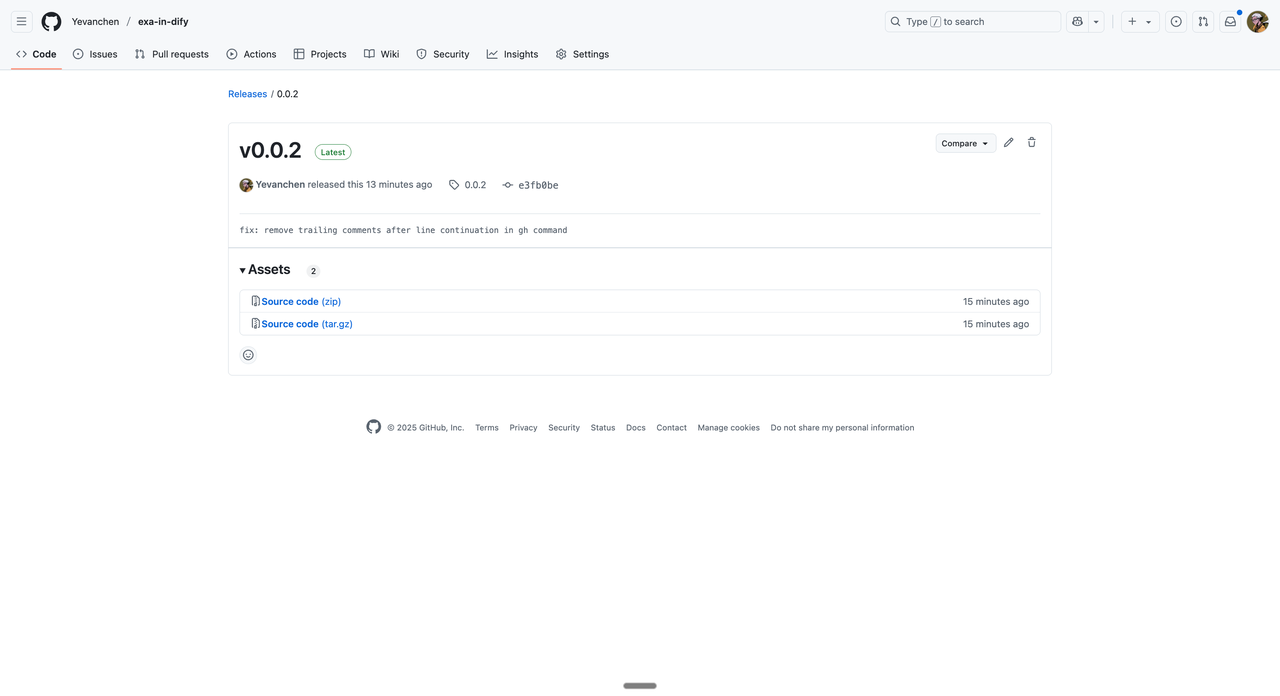
セットアップが完了したら、新しいバージョンを公開する必要がある場合は、以下を行うだけです：

1. プラグインコードを修正します
2. `manifest.yaml`の`version`フィールドを更新します

![リリース](https://assets-docs.dify.ai/2025/04/9eed2b9110e91e18008b399e58198f03.png)

3. すべての変更をmainブランチにプッシュします
4. GitHub Actionsがパッケージング、ブランチ作成、PR提出を自動的に完了するのを待ちます

### 実行結果

プラグインソースリポジトリのmainブランチにコードをプッシュすると、GitHub Actionsは自動的に公開プロセスを実行します：

* プラグインを`{plugin-name}-{version}.difypkg`形式で自動的にパッケージ化します
* パッケージファイルをターゲットリポジトリに自動的にプッシュします
* フォークリポジトリへのマージを自動的にPRで作成します

![結果](https://assets-docs.dify.ai/2025/04/60d5de910c6ce2482c67ddec3320311f.png)

### サンプルリポジトリ

完全な設定の詳細とベストプラクティスを理解するために、[サンプルリポジトリ](https://github.com/Yevanchen/exa-in-dify)を参照してください。\`